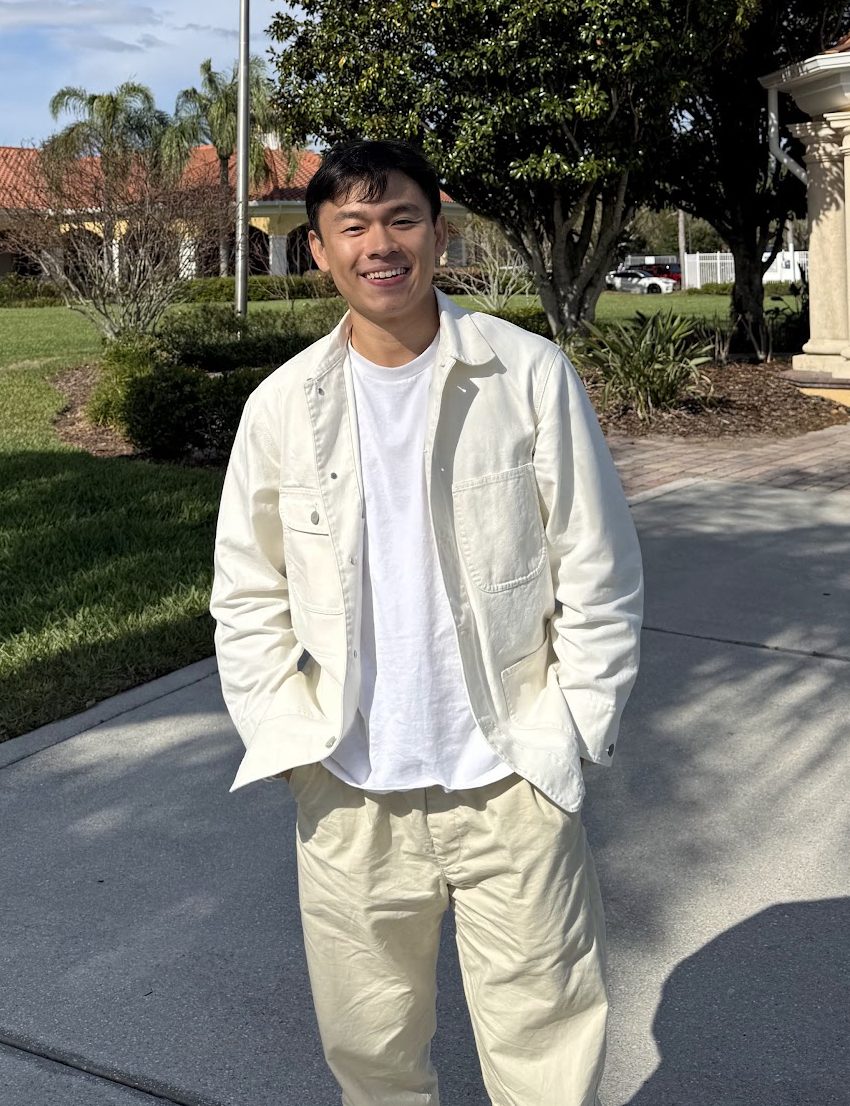
Who am I?
From a bird’s-eye view, I am:
A builder. I execute on ideas fast. Whether it’s launching startups, iterating on product ideas, or optimising systems, my instinct is to create and refine.
A T-shaped generalist. I believe skill stacking is the ultimate leverage. I pick up technical, business, and operational skills, not just to know them, but to apply them in real-world scenarios.
A tech optimist. I believe technological progress is the key to solving many of our biggest challenges, from environmental sustainability to social and political divides. By building on the innovations of the past, we can create a better future.
My early life
I grew up in Malaysia, caught between two contrasting realities: the traditional path of job security and stability, and the rapidly emerging world of tech, business, and global opportunities.
My parents were part of Malaysia’s first generation of university graduates, navigating the country’s economic transition. They weren’t rich, money was tight, they worked extremely hard, and they always taught us how important it was to live within our means and to save. But no matter how difficult things got, they always prioritised my education.
The education system that worked for their generation, however, wasn’t necessarily the best for mine. I started to see the gaps: outdated methods, rigid structures, and a lack of real-world application. Their hard work eventually paid off, we moved into a comfortable home, but the values of hard work, adaptability, and resourcefulness stuck with me for life.

School
I spent my early years in a traditional Asian education system, heavily focused on rote memorisation. From a young age, I learned how to game the system, doing just enough to secure top grades while reserving my real energy for things that actually interested me. I was a straight-A student in almost everything (except Mandarin, that’s a killer for me).
My family prioritised education above all else. While the discipline helped me academically, it also made my childhood somewhat isolating. Fictional books became my escape; I read voraciously, which strengthened my language skills but kept me socially withdrawn.
Ultimately, I found that real education didn’t come from textbooks. The best way to learn was to dive into real-world problems and force myself to solve them, a mindset that would later define my approach to business and tech.
My first taste of making money
During college, I was busy flipping graphical calculators. It was quite literally my first real experience understanding money, supply and demand, and the fundamentals of business.
A new calculator cost around RM800, very expensive for most students. The second-hand market was thriving, with units going for RM200–300, but it was filled with low-quality, faulty, or counterfeit products, and peer-to-peer deals were risky. That’s where I came in. I started one unit at a time, and as demand grew I reinvested into more stock. Eventually, anyone who wanted a second-hand calculator at a few key private universities in Malaysia was basically transacting through me.
For about a year, at the age of 18, this side hustle made me around $1,000 a month, a decent fresh-graduate salary in Malaysia. Through it I learned some core principles: profits first (margins, pricing, reinvesting), supply & demand (prices rise when supply is low), and how to generate leads (to earn more, find more sources). I’d proven to myself that I could create value by solving a problem, and it showed me a different path than seeking employment.
University
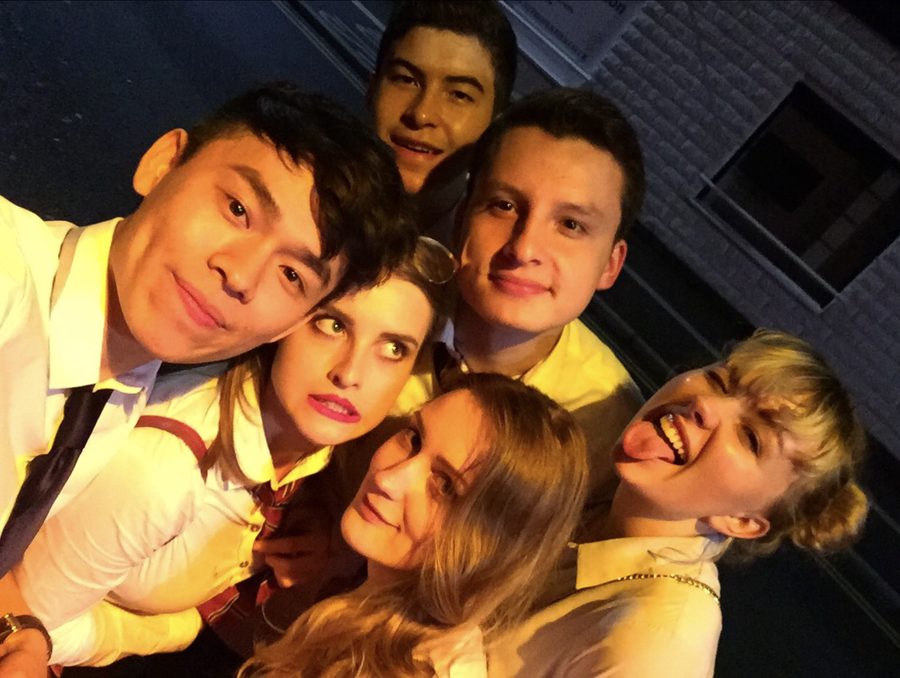
When I entered university, I had no real direction. Biotechnology, then medicine, then dentistry, at 18 I felt like I had to decide my entire future within three months or I’d be “falling behind.” Finally, I settled on a Bachelor’s in Accounting & Finance, inspired by an aunt’s career, an interest in business, and my parents’ advice to specialise. The irony? I had no clue how accounting worked; I’d been a science student my whole life.
In hindsight, my choices weren’t truly mine, they were echoes of the expectations planted in me by the people around me. I told myself I’d graduate with First Class Honours to make my parents’ sacrifice worthwhile, and I did. But first class or not, it’s just grades. What mattered more was whether I really knew what I was doing, how I’d add value to the world, and whether I found any fulfillment in it. At the time, the honest answers were: not really.
Still, my time abroad was the best phase of my life, no money could buy that back. It was also where I got deeply involved in clubs and societies: representing my university in a business competition, judging our Startup Weekend, and spearheading Campus Capital, a student venture fund aiming to bring more money to Northern England startups. Watching founders pitch, build, and iterate through failure, the startup bug bit me too.
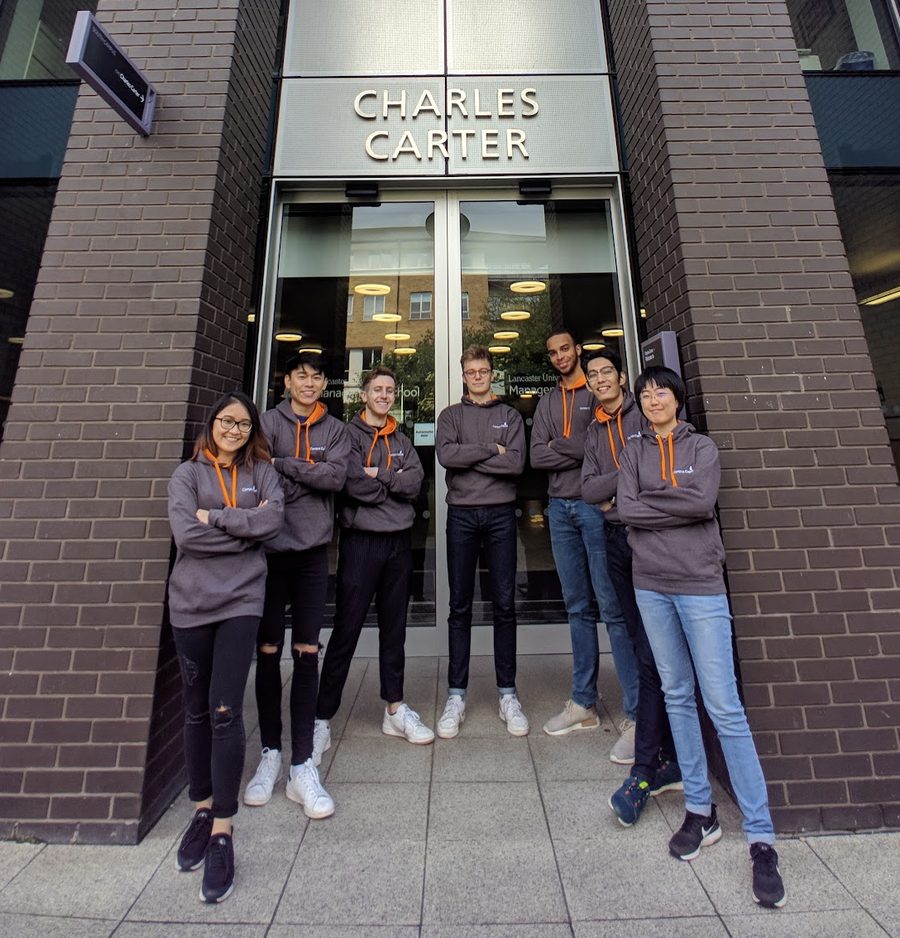
After graduating I moved back to Malaysia to work in a venture capital firm. But sitting on the sidelines, market research, due diligence, crunching numbers all day, wasn’t for me. I didn’t want to be the financier. I wanted to be in the action. I wanted to build. The problem: I had no money, no business skills, no marketing skills, no coding skills. Just a fresh graduate with a lot of dreams and no skills at all.
Learning to build
The decision was simple: I wanted to build startups. I was inspired by people like Steve Jobs and by SaaS founders who created something once and scaled it to millions. During my VC days I met an indie hacker making ~$20,000 a month, just him, his code, and a small team. My bet was hedged: best case, my startup kicks off; worst case, I fail but walk away with in-demand engineering skills and can always get a job. So I went all in.
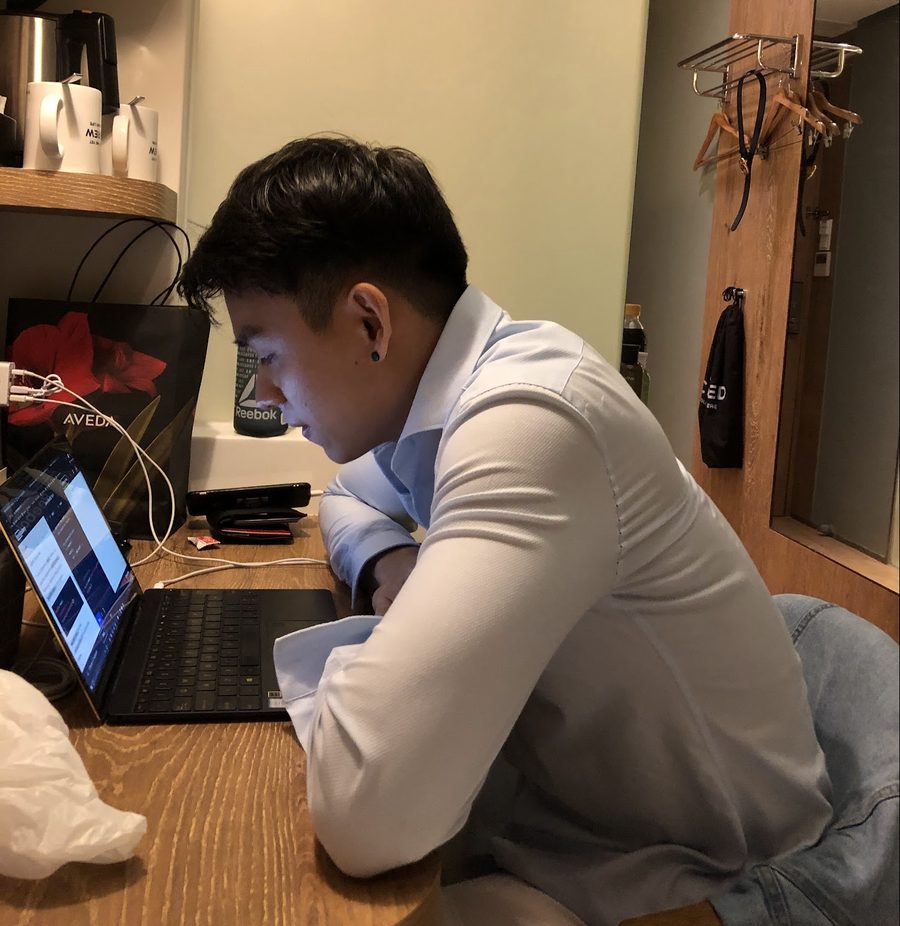
I started learning the moment I landed my VC job, coding during every bit of downtime, after work, during travels, skipping social activities entirely. I leaned hardest on CS50, freeCodeCamp, and YouTube tutorials. They were great starting points. But after six months, I was still stuck in tutorial hell. I could code along and copy all day, but when it came to writing something from scratch? Blank.
It was probably the most demoralising point in my life, 12 hours of coding every day with little to show for it, and no one in it with me. When JavaScript got tough I switched to Ruby, then Python, then the latest frameworks, then UI/UX, then data analytics. An infinite loop, going nowhere.
At the brink of giving up, I caught myself applying for random jobs one day and snapped out of it. I was six months in, I didn’t want to prove the doubters right. I’d read about “learning by building”: no more coding along, no more looking at solutions, no more videos. Do or die. So I picked one stack (Vue, Tailwind, Express, Firebase), picked one project (a clone of an object-detection app that helps blind people see), and forced myself to figure it out, no excuses. No AI back then, just Stack Overflow, Google, and a whole lot of problem solving.
I shipped it in a few weeks and posted it on LinkedIn, and it blew up. People started reaching out for software work. That’s when it clicked: there’s no secret to learning to code. Just like swimming, you learn by doing. A thousand hours of tutorials won’t teach you. You learn to code by coding.
From there I stacked small wins. Confidence grew, projects came in, and within six months I’d closed work worth $2,500, then $10,000, $25,000, then $50,000, far beyond my original $1,000/month goal. I also learned three things fast: tech talent is scarce as hell, I had no time to build it all alone, and clients don’t care what stack you used.
The Hacker Collective
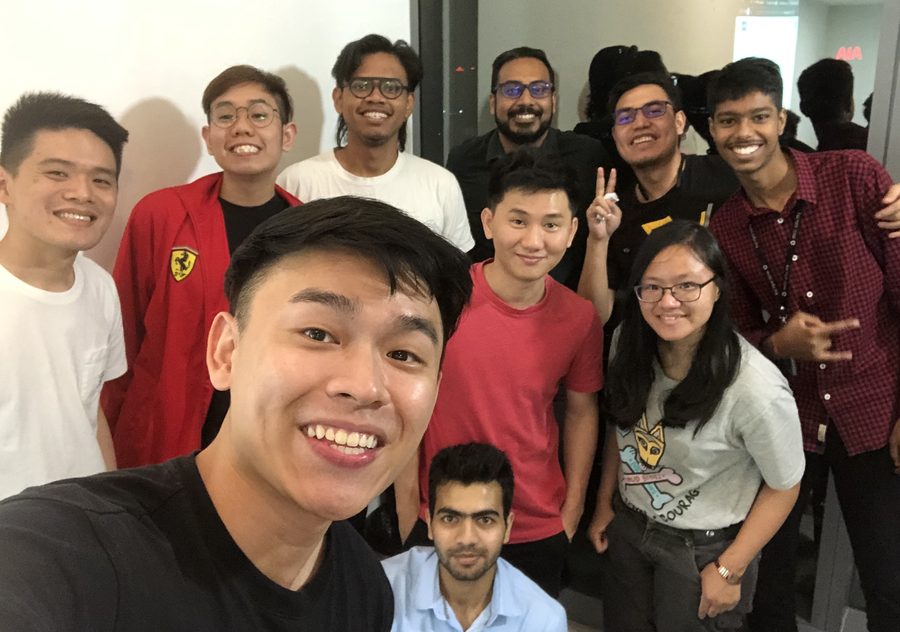
In my loneliest days learning to code, I organised meetups via Facebook Groups and Eventbrite. Tons of people wanted to learn but lacked accountability, so we met weekly using free resources. I noticed a trend: nearly 80% of learners dropped out by month three or four, when it got hard. Eventually I found myself not just organising but teaching, which forced me to fill the gaps in my own knowledge. Since I was doing the teaching anyway, I started charging for it.
With my then-partner Ming, who was two years ahead of me and already shipping his own projects, we grew groups as big as 50 paying members a month. Seeing what he could do lit a fire in me: you don’t need a CS degree, you don’t need permission, you just need to start building. That mindset became The Hacker Collective, the scrappiest, most bootstrapped phase of my life, where more than 10 of our students (from finance, marketing, even construction) landed real tech jobs across Malaysia, Singapore, and remote roles globally.
As we grew, Ming and I started diverging in vision, he leaned into venture building, I was obsessed with education. So we split: Ming took the ventures arm, I took the education arm, doubling down on bootcamps, mentorship, and career placement. A tough but necessary split that laid the foundation for everything after.
Sigmaschool
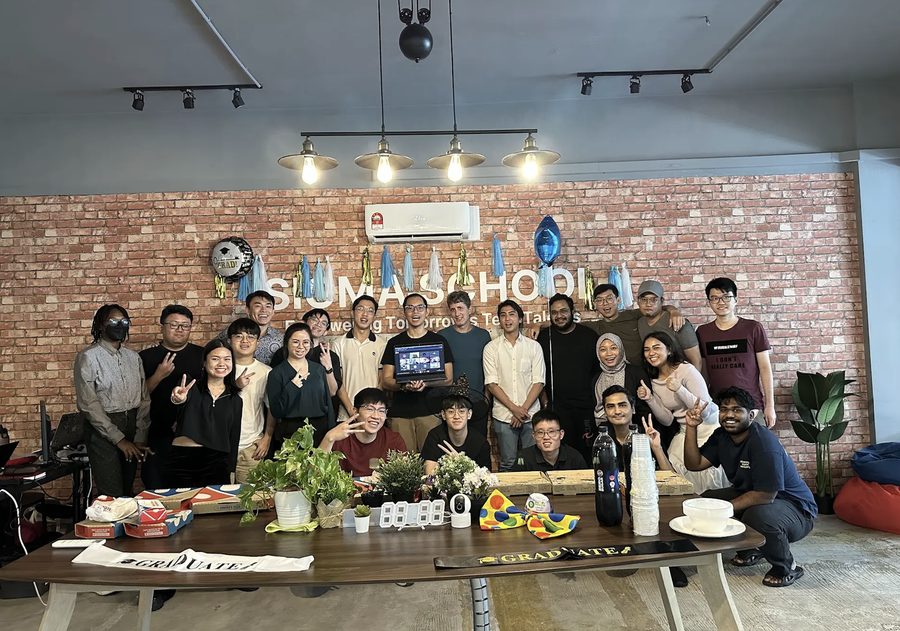
Inspired by bootcamps like Lambda School, where students paid only once they got a job, I wanted to align our success with our students’. An income-share model proved unworkable in Malaysia, so we reimagined it: a 3-month bootcamp, secure a tech job after graduation, or get a full refund.
In 2022 we pre-launched with a modest RM3,000 in advertising. The response was overwhelming, roughly RM30,000 in the first month, before the product was even fully built, with just a landing page. That validated the need. Today, Sigmaschool partners with over 50 hiring companies across Singapore, Malaysia, and Australia, and we’ve celebrated 100+ success stories: a doctor from the UK pivoting careers, gig workers transforming their paths, people landing jobs just 1.5 months in.
Where it’s heading: Sigmaschool is becoming a fully AI-native school, training a new kind of AI-native software developer. We teach the modern AI-native stack our students actually build with, Claude Code and agentic coding tools at the core, alongside a solid full-stack foundation (Vue, Tailwind, Node, GCP, and the rest). The goal: developers who build with AI from day one and ship faster because of it, instead of bolting it on later.
Fractional AI
Sigmaschool is my 9-to-5. My 5-to-9 is fractional, AI-native work for founders, and I’m good at it. I don’t measure work by hours anymore, but by output. It began in 2023 building full-stack software for a stealth startup, a $400k+ engagement spanning Vue, Tailwind, Docker, GCP, Express, Hasura, and GraphQL.
Today I do that same work fractionally, but AI-native: AI SEO, AI software development, AI workflow automation, and AI design. A full-stack AI suite, working alongside founders to figure out how to disrupt their field and simply do it better.
Become AI-native before your competitors do. I’ve built software for years and kept seeing the same thing: brilliant teams losing hours to work that AI can now do. You know your field better than anyone; I bring the AI-native tools to make your people dramatically faster at it.
Services are the new software. Sequoia’s thesis names the shift I’ve felt for years. The next generation of category leaders won’t just sell tools, they’ll deliver the work itself, with AI doing the heavy lifting. The companies that adopt this first, in every industry, pull away from the ones that don’t.
Where my head’s at now
By day I’m all-in on Sigmaschool; my evenings go to fractional AI. Both point at the same shift: helping people and teams become AI-native. I’m still learning how to be a better leader, to attract great talent, build something amazing with them, and, more importantly, keep them.
In the short term, money is a key factor: I’ve set a goal of $1M in annual profit. Longer term, I want to make a massive impact, and technology is the most obvious path. I’m not drawn to academia or research, but I enjoy entrepreneurship and I’m good at it, so I see myself starting or joining a company that fundamentally changes how an important part of the world works.
Misogi
Misogi is an old Japanese practice I first heard about from Jesse Itzler. The modern take is simple: once a year, do one thing that genuinely scares you, something hard enough that it defines the entire year. The idea is to pick something you’re not even sure you can pull off.
Mine so far:
- 2023 · Earned my advanced diving certification in Brunei.
- 2024 · Hiked Mount Kinabalu, the tallest mountain in Southeast Asia.
- 2025 · Learned to snowboard in Japan.
- 2026 · The scariest one yet, learning to live with someone. My girlfriend (now ex) moved from Taiwan to Malaysia, and we couldn’t make it work. It was devastating, and harder than most things I’ve attempted in life or business. Making love work is not easy. Still learning and recovering as I go.
- 2027 · Toying with the idea of stepping into a boxing ring for a real fight before I hit 30.
I love getting my team aligned on this too, everyone picking their own misogi, so we’re all growing outside our comfort zones together.
Beliefs & guiding principles
1. Execution > ideas. Ideas are worthless without action. I focus on building, testing, and iterating quickly.
2. Leverage is everything. Through technology, people, or systems, I always look for ways to maximise impact with minimal effort.
3. Learning comes from doing. The best way to learn is by building. I believe in the “learn by building” approach.
Role models & ideas
A handful of people and ideas have shaped how I think:
Gary Vaynerchuk. Stack positive karma. Build real relationships, earn trust, and keep investing in it over time. Winners optimise for the long game, not quick hacks or fast wins.
Seth Godin, Purple Cow. Build something remarkable, literally worth making a remark about. In a crowded market, blending in is the real risk, so stand out.
Tim Ferriss, The 4-Hour Workweek. Optimise relentlessly and do things unconventionally. Question the default way of working and design around leverage instead of hours.
Books that shaped me
The all-time favourites that genuinely changed my life:
- Sapiens, Yuval Noah Harari
- Sell Like Crazy, Sabri Suby
- The Millionaire Fastlane, MJ DeMarco
- Atomic Habits, James Clear
- The Power of Now, Eckhart Tolle
What’s next?
I have no plans to slow down. My goal is to keep building, learning, and pushing boundaries, scaling my current businesses, launching new ventures, and mentoring the next generation of builders. I see this as just the beginning. If you’re working on something interesting, let’s connect.